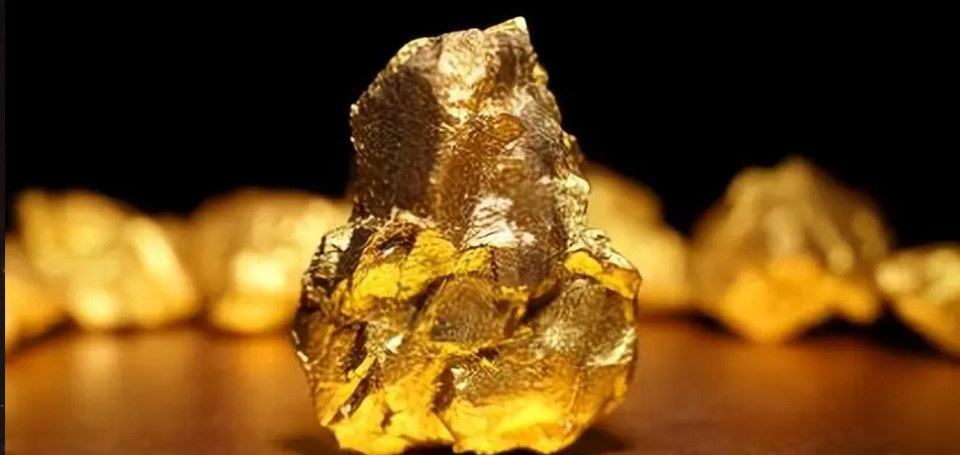
Many customers often ask whether gold refining and extraction are practically feasible.
The answer is yes — with the right materials, equipment, and safety measures, you can successfully refine gold at various scales.
At Dasen Mining, we’re committed to sharing expert knowledge on the gold selection and refining process, helping miners and small operators improve efficiency and achieve high-purity results.
If you have any questions, our professional technical team is always ready to assist you.
Essential Materials for Gold Extraction
To carry out the gold refining process, you’ll need the following apparatus and reagents:
Handheld heat gun or torch
Borax (used as a flux)
Electronic scale
Small crucible for melting
Glass stirrer
Filter cloth or mesh
Multiple graduated beakers
Electrolyte solution
Diluted nitric acid
Zinc wire
pH test paper
Citric acid (for acidification)
Gold powder or gold‑plated material (recommended source ore or scrap; avoid pre‑refined material)
Step‑by‑Step Gold Extraction and Refinement Process
Step 1 – Stripping the Gold
Mix the gold‑plated material with gold‑stripping powder in a 50 : 1 ratio.
Add hot water and stir until a golden‑colored solution forms.
If dissolution is incomplete, it usually indicates higher gold content; add more stripping powder as needed.
Step 2 – Filtering and pH Adjustment
Filter the solution using filter cloth or mesh to remove base impurities and rinse several times with water.
The filtrate will be alkaline — adjust the pH using citric acid until the solution becomes acidic, a critical step for the subsequent zinc reaction.
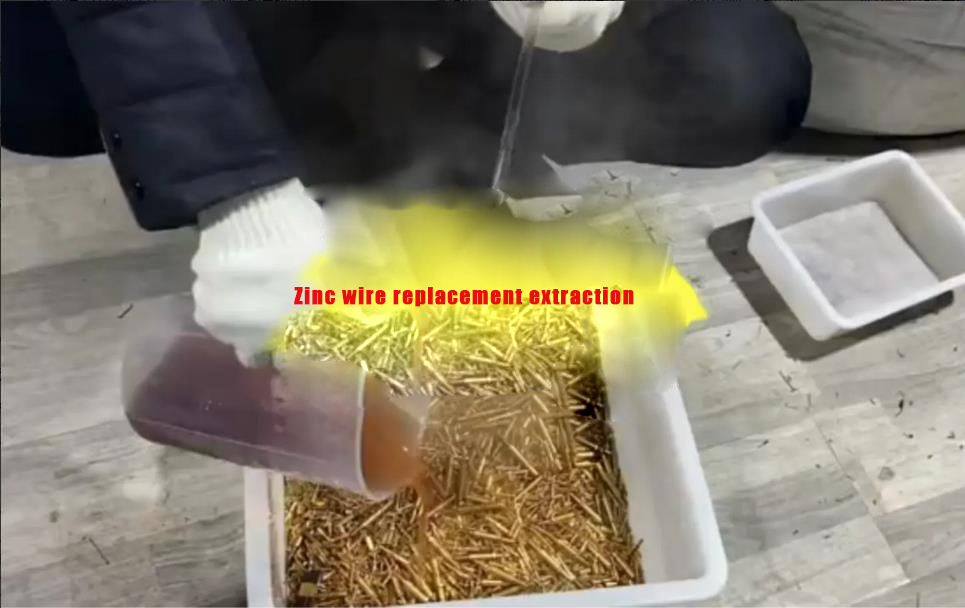
Step 3 – Zinc Replacement
Add fluffy zinc wire to the acidic solution and ensure full immersion.
Over the next 2–3 hours, the zinc will react, precipitating gold as a dark, powdery substance at the bottom of the container.
Step 4 – Precipitation and Purification
Transfer the mixture into a larger vessel and slowly add the electrolyte solution to accelerate gold precipitation (forming sponge gold).
Add diluted nitric acid to remove impurities and heat gently in a melting furnace.
After boiling, cool the mixture and rinse thoroughly.
Repeat the purification and electrolyte treatment until sediments appear clean and metallic.
Step 5: Melting and Final Refinement
Rinse and knead the brown sponge gold until all residues are removed.
Add borax flux to facilitate smelting.
Use a torch or furnace to melt the material completely.
Cool the melt — the result is 99.9% pure gold in solid form.
Gold refining involves strong acids and high temperatures.
Always work in a well‑ventilated area and use proper protective gear — gloves, goggles, face masks, and chemical‑resistant clothing.
Improper handling or ventilation can be hazardous.
Recent Posts
-
 How Did Mongolia’s 5,000 t/d Heap Leaching Project Boost Gold Recovery with Eco-Friendly Reagent A+?
 -
 Why Choose Dasen for Your Sodium Cyanide Gold Extraction Needs?
 -
 Why Does Built Labs Improve Zimbabwe’s Gold Processing Profits?
 -
 What Makes 95% Efficient Activated Carbon the Top Choice for Zambia’s Gold Recovery?
 -
 10TPD CIL Plant to Ghana is nearing completion